Bhagavad Gita: The Timeless Guide to Life, Dharma, and Self-Realisation

Updated: Apr 3
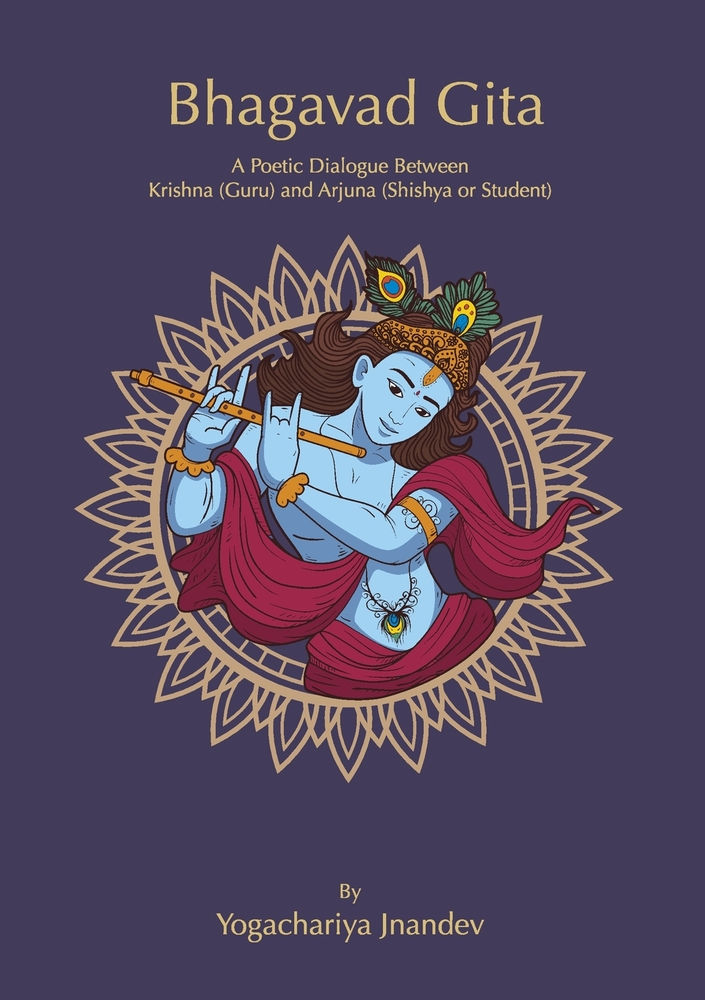
The Bhagavad Gita, often simply called the Gita, is one of the most sacred and profound texts of Sanātan Dharma. Set within the epic narrative of the Mahabharata, it is a dialogue between Lord Krishna and Arjuna on the battlefield of Kurukshetra.
At a moment of deep moral crisis, Arjuna is overwhelmed with doubt, fear, and confusion about his duty (Dharma). In response, Lord Krishna delivers timeless wisdom that addresses not only Arjuna’s dilemma but the universal struggles of all human beings.
The Bhagavad Gita is not merely a religious text—it is a practical guide to living with clarity, purpose, and inner peace.
The Context: Life as a Battlefield
The battlefield of Kurukshetra represents the inner battlefield of the human mind. Every individual faces conflicts between:
Duty and desire
Right and wrong
Attachment and detachment
Fear and courage
Arjuna’s crisis reflects the condition of modern humanity—confused, emotionally overwhelmed, and disconnected from higher wisdom.
The teachings of the Gita provide a pathway to rise above these conflicts through right understanding and disciplined action.
Core Teachings of the Bhagavad Gita
1. Dharma – Living Your True Duty
One of the central teachings of the Gita is the importance of Dharma—living in alignment with one’s responsibilities and higher purpose.
Krishna advises Arjuna to:
Perform his duty without hesitation
Act according to righteousness, not personal attachment
Trust the divine order of life
This teaching reminds us that fulfilment comes from right action, not avoidance.
2. Karma Yoga – The Path of Selfless Action
The Bhagavad Gita introduces the profound concept of Karma Yoga:
Perform action without attachment to results
Offer all actions to the Divine
Remain balanced in success and failure
This transforms ordinary action into spiritual practice.
In modern life, Karma Yoga teaches us to:
Work with dedication but without stress
Let go of outcomes
Cultivate inner peace amidst activity
3. Jñāna Yoga – The Path of Knowledge
Krishna explains the nature of reality through Jñāna (wisdom):
The Self (Ātman) is eternal
The body is temporary
Death is not the end, but a transition
Understanding this truth removes fear and attachment.
This teaching aligns with the deeper philosophical insights of the Upanishads and the wisdom traditions of India.
4. Bhakti Yoga – The Path of Devotion
Another powerful path presented in the Gita is Bhakti Yoga—the path of devotion and surrender.
Krishna teaches:
Surrender to the Divine with love and trust
Remember the Divine in all actions
Develop faith and humility
Bhakti brings emotional purification and deep inner connection.
5. Dhyāna (Meditation) – Mastery of the Mind
The Gita emphasises the importance of meditation for controlling the restless mind.
Key teachings include:
Regular meditation practice
Withdrawal of senses
Steady concentration
Through meditation, one develops:
Mental clarity
Emotional stability
Spiritual awareness
The Three Gunas: Understanding Human Nature
Krishna explains that all human behaviour is governed by three fundamental qualities:
Sattva – purity, clarity, harmony
Rajas – activity, desire, restlessness
Tamas – inertia, ignorance, dullness
Self-awareness allows us to:
Reduce tamas
Balance rajas
Cultivate sattva
This leads to a more conscious and harmonious life.
Relevance of the Bhagavad Gita in Modern Life
The wisdom of the Bhagavad Gita is deeply relevant today:
Stress and Anxiety → Learn detachment and inner balance
Decision-Making → Act with clarity and Dharma
Work Pressure → Practice Karma Yoga
Emotional Turmoil → Cultivate Bhakti and surrender
Mental Restlessness → Practice meditation
In a fast-paced world, the Gita provides a timeless anchor of wisdom and stability.
The Universal Message
The Bhagavad Gita is universal in its approach:
It does not belong to any one religion
It speaks to all seekers of truth
It integrates action, knowledge, and devotion
Its ultimate message is:
Live with awareness, act with righteousness, and realise your true Self.
Conclusion
The Bhagavad Gita is a living scripture that continues to guide humanity across generations. It teaches us how to live fully in the world while remaining spiritually grounded.
For the modern practitioner of yoga and Sanātan Dharma, the Gita is not just a text to be read—it is a manual for life, practice, and self-realisation.


Comments